

In many industrial processes, managing pressure safely is not simply a design consideration; it is essential for protecting equipment, personnel and the surrounding environment. Safety relief valves are installed throughout process plants to prevent overpressure situations that could otherwise lead to equipment damage, production shutdowns or serious safety incidents.
One of the most widely recognised standards for pressure protection equipment is the API 526 relief valve standard. Engineers frequently specify valves built to this specification because they offer consistent sizing, proven performance and compatibility with widely used engineering design practices.
At Heaps, we regularly work with engineers and operators across sectors including power generation, chemicals, pharmaceuticals and oil and gas. A common question we are asked is whether it is better to specify an API standard valve or a non-standard relief valve design.
What Is an API 526 Relief Valve?
An API 526 relief valve is a pressure safety valve designed according to dimensional standards defined by the American Petroleum Institute. The standard ensures consistent valve sizes, flange connections and orifice capacities across manufacturers.
The API 526 specification defines key parameters such as:
- Valve flange dimensions
- Standardised orifice sizes
- Face-to-face valve dimensions
- Pressure and temperature design parameters
Because these elements are standardised, engineers can design pressure protection systems knowing that an API 526 safety relief valve will fit within the specified piping layout and deliver predictable flow capacity.
In practice, this means a valve selected for a process system today can often be replaced years later with another API 526 relief valve without requiring major pipework modifications. This interchangeability is one of the main reasons the standard is widely adopted across process industries.
API 526 Relief Valve Applications in Industry
API 526 safety relief valves are commonly installed in industrial systems where pressure must be carefully controlled to protect critical equipment.
Typical applications include:
- Steam systems and industrial boilers
- Pressure vessels and reactors
- Chemical processing plants
- Gas handling systems
- Pump and compressor protection
- Storage tanks and pipelines
In these environments, pressure fluctuations can occur rapidly. Safety valves must respond immediately to protect the system.
Using a standardised API 526 pressure relief valve ensures engineers can rely on a design that has been widely tested and proven across many industrial installations.
API 526 Relief Valve vs Non-Standard Relief Valves
While API standard valves are widely used, non-standard relief valves are sometimes specified for specialist applications. These may include custom dimensions, unique flow capacities or bespoke connection types.
However, several important differences exist between API 526 relief valves and non-standard valve designs.
Interchangeability
One of the biggest advantages of the API 526 standard is interchangeability.
Because valve dimensions and orifice sizes are standardised, engineers can replace an existing valve with another API 526 model from the same or different manufacturer without modifying the surrounding pipework.
Non-standard valves often require custom installation layouts, which can make maintenance and replacement more complex.
Predictable Performance
API 526 relief valves follow established engineering design and testing standards. This allows engineers to accurately calculate flow capacity and system protection using recognised sizing methods.
Non-standard valves may require additional verification to ensure they meet the required performance characteristics.
Industry Familiarity
Most engineers are trained to work with recognised valve standards. Engineering documentation, sizing software and process design references commonly rely on API valve standards.
Using an API 526 relief valve allows engineering teams to work with familiar specifications, reducing the risk of design or installation errors.
Maintenance and Spare Parts
Standardised valves simplify long-term maintenance planning.
Replacement parts and spare valves are easier to source when they conform to industry standards. In contrast, non-standard valves may require bespoke components with longer lead times.
API 526 Relief Valve vs Non-Standard Valve Comparison
API 526 Relief Valve:
- Dimensions – Standardised
- Interchangeability – High
- Installation – Straightforward
- Maintenance – Easier spare part sourcing
- Engineering familiarity – Widely used standard
Non-Standard Relief Valve
- Dimensions – Custom
- Interchangeability – Limited
- Installation – May require modification
- Maintenance – Often bespoke components
- Engineering familiarity – Less consistent
For most process industries, these benefits make API 526 safety valves the preferred choice.
API 526 Relief Valve Orifice Sizes
Another important aspect of the API 526 standard is the use of standardised orifice sizes.
These orifice designations typically range from D to T, with each size representing a specific discharge area and flow capacity.
Standardised orifice sizes allow engineers to calculate valve capacity accurately when protecting pressure vessels, piping systems and process equipment.
This consistency simplifies the valve sizing process and helps ensure that the selected API 526 relief valve will provide adequate protection for the system.
API 526 Relief Valve Design Considerations
When specifying an API 526 safety valve, engineers must consider several important factors to ensure the valve performs correctly within the system.
These include:
- System pressure and allowable overpressure
- Required relieving capacity
- Process fluid characteristics
- Operating temperature conditions
- Back pressure in the discharge system
In many installations, balanced bellows designs are used to reduce the effects of back pressure on valve performance. Other configurations such as open bonnet designs may be selected for high temperature services.
Correct specification ensures the valve responds quickly and reliably when overpressure occurs.
API 526 Relief Valve Solutions from Heaps
At Heaps, we supply a comprehensive range of process safety valves designed for demanding industrial environments.
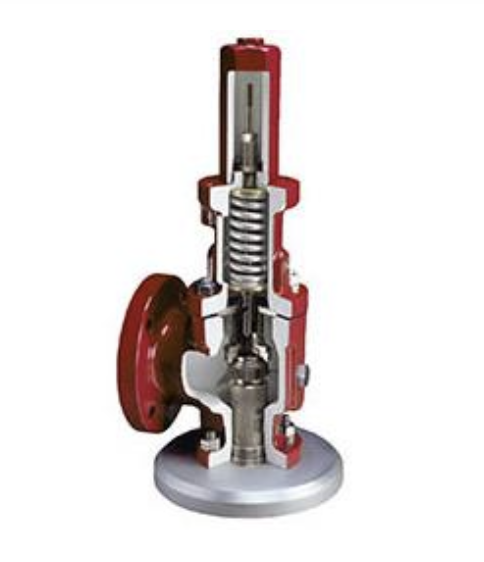
One example is the Farris 2600 and 2600L Series Spring Loaded Safety Valve, a high performance pressure protection solution used across multiple process industries.
These valves conform to API 526 relief valve dimensional standards and feature a full nozzle design.
Key features include:
- Conforms to API Standard 526
- Full nozzle safety valve design
- ASME NB certified for air, steam and water
- 2600L multimedia design dual ASME NB certified for water and air
- CE approved
The valve range is available in sizes from 1″ x 2″ to 20″ x 24″, with pressure ratings from 15 to 6000 psig (1.0 to 413 barg).
These valves are designed to operate in demanding environments, with temperature capabilities from -450 to 1500°F (-268 to 815°C).
Material options include:
- Carbon steel
- Stainless steel
- Low and high temperature alloy steels
- Monel®
- Hastelloy C®
- Duplex materials
- NACE compliant materials
Additional options such as balanced bellows, O-ring seats and open bonnet designs allow the API 526 relief valve to be configured for applications involving air, gas, vapour, steam and liquids.
Why Engineers Continue to Choose API 526 Relief Valves
Across modern process industries, safety and reliability remain the highest priorities. Engineers responsible for plant equipment must ensure that pressure protection systems are dependable, predictable and easy to maintain.
Standardisation plays a key role in achieving this.
Choosing an API 526 relief valve offers several advantages:
- Proven industry design
- Consistent installation dimensions
- Reliable capacity calculations
- Easier maintenance and replacement
- Compatibility with recognised engineering standards
While non-standard valves may still be used in specialist cases, most industrial systems benefit from the reliability and interchangeability provided by standardised valve designs.
For engineers responsible for protecting high value equipment and maintaining plant safety, this consistency provides significant reassurance.
API 526 Relief Valve FAQs
What is an API 526 relief valve?
An API 526 relief valve is a pressure safety valve manufactured according to dimensional standards defined by the American Petroleum Institute. The standard ensures consistent valve sizes, flange connections and orifice capacities across manufacturers.
What industries use API 526 relief valves?
API 526 safety relief valves are commonly used in industries such as oil and gas, chemical processing, power generation, pharmaceuticals and general industrial manufacturing.
What is the difference between API 520 and API 526?
API 520 provides guidelines for sizing and selecting pressure relief valves, while API 526 defines the dimensional standards and orifice sizes used for flanged safety relief valves.
Why are API 526 relief valves widely used?
Engineers prefer API 526 relief valves because they provide predictable performance, standardised installation dimensions and easier long-term maintenance.
Speak to Heaps About API 526 Relief Valves
Selecting the correct API 526 relief valve is essential for protecting equipment and maintaining safe plant operation.
At Heaps, our engineering team works closely with clients to help specify the most appropriate pressure relief solutions for their application.
We can assist with:
- Valve specification and selection
- Relief valve sizing support
- Replacement of existing safety valves
- Advice on API 526 compliant valve solutions
Contact Heaps today to discuss your API 526 relief valve requirements.