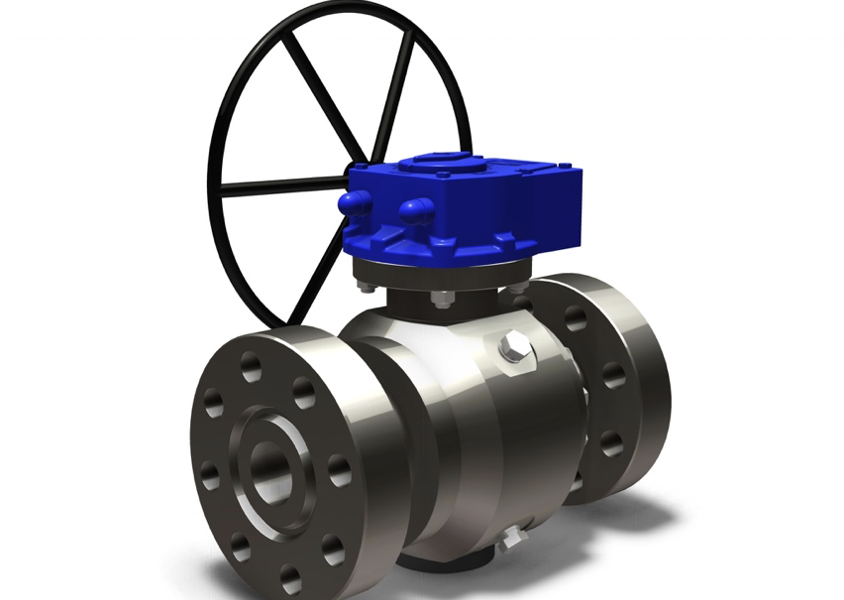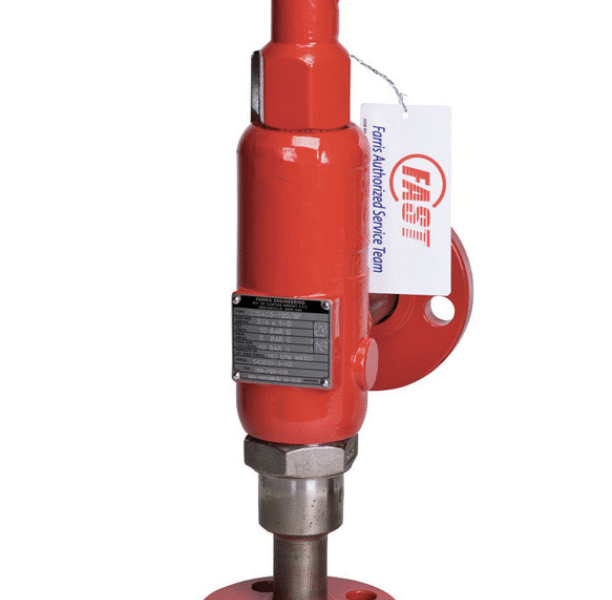


An actuated ball valve pairs the tight shut-off of a quarter-turn ball valve with an actuator that opens and closes it automatically. Specifying one is not a matter of finding an actuator that fits. It has to produce enough torque under real process conditions, work at the lowest air pressure your site can guarantee, move to the right position if that air disappears, and talk properly to your control system.
Break-to-Open Torque and Actuator Safety Factor
Torque is the single most important number here, and a ball valve does not demand the same torque across its whole 90-degree travel. Break-to-open torque, sometimes called breakaway torque, is usually the peak: the force needed to start the ball moving after it has been held against the seats in the closed position. Once movement begins, running torque generally drops, then changes again near the end of travel.
Why catalogue torque is not the final figure
Sizing from a generic valve-size table misleads, because two valves of identical bore can differ substantially in torque demand depending on seat material, differential pressure, temperature, design, operating frequency and the medium. Published data also reflects defined test conditions: a valve left closed for six months can need appreciably more torque to break free than one cycled daily, and dry gas, sticky fluids or media carrying solids all raise it further. Start from the manufacturer’s data for your actual pressure, temperature and seat configuration, then apply a safety factor.
For well-understood standard service, 1.25 times the required valve torque is a sensible minimum. A valve needing 400 Nm should not be matched to an actuator rated at exactly 400 Nm: around 500 Nm gives you a 25% margin.
That is a floor. Dirty, abrasive or safety-critical duties need more, and emergency shutdown can call for considerably higher factors.
Size against the minimum air pressure your site can reliably deliver, not the compressor’s rated maximum: an actuator with ample torque at 6 bar that falls short at 4 bar is wrongly sized if 4 bar is credible. Bigger is not automatically safer either, since excessive output can overload the valve stem, coupling or mounting hardware. Check the assembly against the valve’s mechanical limits as well as its torque requirement.
Matching the Actuator Type to the Duty
Which design suits depends on torque demand, available space, required failure mode and control accuracy.
Rack and pinion
Rack and pinion actuators are the most common choice for quarter-turn valves. Compressed air drives pistons carrying linear racks, which engage a central pinion and convert that travel into rotation. Compact, widely supported, and suited to most on/off and control duties. We supply Hytork, among others, for ball, butterfly and other quarter-turn applications.
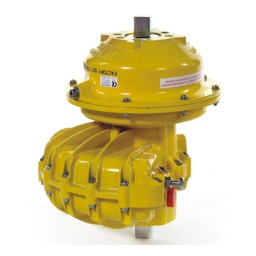
Vane
A vane actuator generates rotation directly rather than translating piston travel through racks and gears, giving fewer moving parts and a compact package. Worth considering where space is tight or rotary accuracy matters. We supply Kinetrol and K-TORK.
Scotch yoke
Scotch yoke actuators convert linear piston movement into rotation through a yoke. Their torque profile suits larger ball valves particularly well, delivering more torque at the beginning and end of the stroke, which is exactly where valve demand peaks. The usual answer for large valves, high torque and demanding oil and gas duty. No design is automatically best: follow the valve torque curve, not headline maximum torque.
Fail-Safe Operation: Spring Return or Double Acting?
Once you have chosen the mechanism, decide what should happen when pneumatic pressure is lost.
Double acting. Air moves the valve both ways. Efficient where you do not need a defined mechanical failure position, but losing air does not drive the valve anywhere in particular: it stays where it was, or moves under process forces.
Spring returns. Air drives one direction, stored spring force the other, which gives you a defined position on loss of pressure. That means you can specify air-to-open with spring-to-close for fail-closed duty, or air-to-close with spring-to-open for fail-open duty.
Write the action, not the state. Avoid “normally open” and “normally closed” in a specification. “Normal” can refer to the process condition, the energised solenoid state or the actuator spring position, depending on who wrote the document, and the three do not always agree. “Air-to-open, spring-to-close” is longer and cannot be misread.
The correct failure position comes from the process safety assessment, not from a preference. A fuel isolation valve may need to fail closed, a cooling water valve to fail open, and some processes are safest holding the last position.
Mounting an Actuator to a Ball Valve
Correct torque selection counts for nothing if the actuator is badly mounted. Stem and drive must stay aligned so torque transmits without side loading.
ISO 5211 interfaces
ISO 5211 standardises the dimensions for attaching part-turn actuators to valves, and compatible interfaces make mounting far simpler. A matching flange standard does not mean any actuator bolts to any valve, though. Check flange and drive dimensions, stem shape and height, orientation, maximum transmitted torque, and the space your accessories need.
Where direct mounting is not possible, a bracket and coupling connect the two, and we supply mounting kits and spindle extensions for automation packages. Position matters as much as size: insulation or lagging often prevents mounting directly above the valve body, and an extension raises the actuator clear while keeping the connection. Design both for the transmitted torque, because a poor coupling introduces backlash, misalignment or excessive stress even when the actuator is sized correctly.
Floating Versus Trunnion: What Changes for Actuation?
Both floating ball valves and trunnion ball valves can be automated, but their designs produce different torque characteristics.
In a floating valve, differential pressure pushes the ball onto the downstream seat, so rising pressure raises seat load and operating torque with it. A trunnion-mounted ball is supported top and bottom, and its seat arrangement carries process loads differently. Make sure the torque data you size against reflects which design you have. That is as far as the comparison needs to go for actuator selection. If the open question is whether your process needs a floating or trunnion valve at all, covering seat arrangements, pressure behaviour and double block and bleed, see our trunnion ball valve design and selection guide.
Position Monitoring and Switchbox Integration
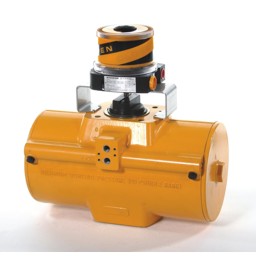
Automating the valve creates movement. Your control system may also need proof that the movement happened. A switchbox mounted to the actuator confirms electrically when the valve reaches open or closed, feeding a PLC or DCS.
That feedback lets you confirm movement, release the next stage of a process, prevent equipment starting against a wrongly positioned valve and support automated shutdown. TopWorx switchboxes combine visual indication with electrical feedback, with sensor types, protocols and enclosure ratings selected to suit the environment. More in our guide to TopWorx switchboxes and reliable valve monitoring.
Hazardous Areas: ATEX and IECEx Solenoid Selection
A pneumatic actuator relies on a solenoid valve to direct the air supply. Where the assembly sits in a potentially explosive atmosphere, every electrical component has to suit that area.
State the hazardous area classification, gas or dust group, temperature class, required protection concept, ambient temperature range, and whether ATEX or IECEx certification applies.
Describing a solenoid as “ATEX” is not a specification. The certification has to match the actual zone and conditions, and options include flameproof, encapsulated and intrinsically safe designs. Review the actuator, switchbox, sensors and every other electrical accessory as one package, not separately.
Our guide to Pneumatrol solenoid valves for ATEX and IECEx applications goes further. For existing installations, our guide to common Keystone actuator problems covers sizing, air pressure, alignment and position control faults.
Valves and Switchboxes We Build Ourselves
We are not only assembling other people’s components. Our Phase range is designed, machined, assembled and tested at our Birkenhead works under ISO 9001:2015, and includes floating and trunnion mounted ball valves alongside the LCSB switchbox. That means we can supply valve, actuator and feedback as one assembly with a single point of responsibility, and because we manufacture pressure-retaining equipment ourselves, we read torque data the way a manufacturer reads it rather than the way a catalogue presents it. More in our guide to Phase ball valves, and on our UK manufacturing capability.
Frequently Asked Questions
What is break-to-open torque on a ball valve?
Break-to-open torque, or breakaway torque, is the force needed to start the ball moving after it has been held against the seats. It is normally the highest demand in the 90-degree cycle, which is why actuators are sized against it rather than running torque.
What safety factor should I use when sizing a ball valve actuator?
For well-understood standard service, 1.25 times the required valve torque is a sensible minimum, so a valve needing 400 Nm should be matched to an actuator rated around 500 Nm. Dirty, abrasive or safety-critical duties need a larger margin, and emergency shutdown can require considerably more.
Should an actuated ball valve fail open or fail closed?
It depends on the process. A fuel isolation valve typically fails closed, a cooling water valve typically fails open, and some processes are safest holding the last position. Take the answer from the process safety assessment, and write “air-to-open, spring-to-close” rather than “normally closed”.
What to Send Us
The more of this we have at the enquiry stage, the faster we can size accurately:
- Valve manufacturer, model, nominal size and pressure class
- Floating or trunnion design, and seat and seal materials
- Process medium, operating and design temperature
- Maximum differential pressure
- Valve torque data, if you have it
- Minimum and maximum instrument air pressure
- Required fail position and frequency of operation
- Required opening and closing time
- Solenoid voltage and position feedback requirements
- Hazardous area classification
- Mounting or spindle extension requirements
- Environmental and corrosion conditions
If the valve is installed, photographs and nameplate details help us establish the existing arrangement.
Talk to Us About an Actuated Ball Valve
An actuated ball valve is a system, not a shopping list. The valve sets the torque requirement, the process sets the failure mode, the site air supply caps the output available, and the control philosophy determines solenoid, switchbox and feedback. Size each element alone, and you get an assembly that bolts together and then disappoints in service.
We can support actuator sizing, mounting, pneumatic control and position monitoring on new and existing installations. Send the details above, and we will come back with a package we can justify.
Call 0151 488 7222 or email info@heaps.co.uk.